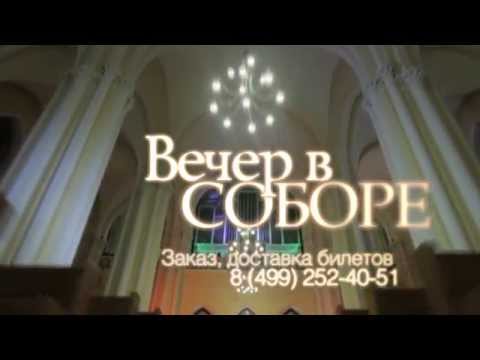
Why is the "Little Mermaid" - one of the most famous fairy tales of Andersen - so sad? Or vice versa: why did such a sad tale become so famous? After all, it has become a symbol of Denmark, children and adults all over the world love it, films and cartoons are made from it, plays and musicals are written. And all in order to mourn? Of course not! It is not sadness that teaches us this beautiful fairy tale, but love. Real love, which is unknown egoism, which rejoices in the happiness of a loved one, even if he is happy with another person. It is for such love that the Little Mermaid receives a treasure unthinkable for her: the immortal soul. And we, after listening to this beautiful story in one breath, begin to appreciate more those who love us. Andersen's ingenious text will be heard in the fabulous "scenery" of the neo-Gothic cathedral. A lively soundtrack will be carefully selected classical compositions performed on organ and harp, and sometimes sung. We will hear the voice of the main character in the famous aria from Dvorak's Mermaid opera, and the wonderful waltz of Tchaikovsky will lead us to her first ball. Speakers: Laureates of international competitions Svetlana Polyanskaya (soprano) Maria Kulakova (harp) Maria Moiseeva (organ) Ingeborg Lyubomirskaya (artistic word) Program: I. S. Bach, P. Tchaikovsky, A. Dvorak, A. Myule, I. Albenis , G. Foret, S. Gounod, S. Rachmaninoff, C. Saint-Saens, etc.