E. Kamburova Theater
Oleg Pogudin. Concert-play "Melody of Dawn. Greek Songs"
Prazdnichnyy koncert. Vselennaya NÉOklassiki. L.Eynaudi. H.Cimmer. M.Rihter
Together - more fun! And the rain is afraid to be more cheerful, and the echoes to be called out, and the secret language to invent ...
And it's impossible to divide singly and singly into singles, it's absolutely necessary to have a comrade there!
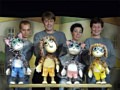
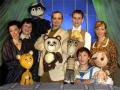
In general, without a friend anywhere. Therefore, the kitten Gav and the puppy made friends. Now they go to visit each other and walk together.
Where it became more interesting to live! It is necessary, say, a puppy for a cutlet to hide. Then the kitten will help him: hide it in the stomach, and deal with the end. No one will find a cutlet anymore, no one will take it!
Do you want to look inside the old music box?
In this wonderful fantasy of the vocal works of Schumann and Schubert, words and music are equivalent.
Four singers in bright clothes enthusiastically sing in German under the enchanting sounds of guitar, flute and piano.
Strong voices of girls want to compare with great musical instruments.
Each of the elegant performers creates their own unique image for the sad or very unusual funny romances that we are accustomed to.
By the elusive movements of her hands or eyes, it becomes clear what she sings so heartfeltly.
The vocal performance of each aria is beyond praise.
This is the classical music that you want to listen to again and again.
Another talented director of Ivan Popovsky.
"I stretch my dreams under your feet, go easy on them, my you trample on dreams."
"Let the person be no more than the eye of an ant - but the personality is a person! So I think! "
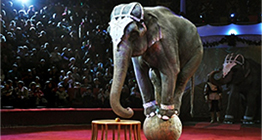
The Horton elephant is an example of honesty and decency, from someone, and it's not a shame to learn from him! It does not matter which creature is big, small or very tiny, the elephant Horton treats everyone with the greatest respect. It is a person, even a tiny one. He will not let him exterminate the city, even if this city is the size of a fuzz!
And if an elephant had to sit out an egg, he would not abandon the chick for anything in the world. And cold and hunger are not terrible to him, because the main thing is not to let the egg freeze, from there the whole person will soon hatched! And it turned out that a slogan came out of the egg - after all, his elephant was hatching! Whatever you say, and this was a worthy retribution for his labors - the elephant Horton was happy when he saw the toddler!
In Moscow, there are places that can be called "Bulgakov": here the writer lived and worked, funny stories happened to him there. But especially the interests of those locations, which placed the author of the heroes of the novel "The Master and Margarita."
In places that played an important role in the life of Mikhail Bulgakov, and in those places that are noted in the novel, the guests of the excursion will be lucky with the retro tram "302-BIS". If you dive into the past, if you dive headlong into the world of the Bulgakov novel, then only on such a tram - stylish, beautiful. Such a tram - like an echo of the past times, missed several decades, which passed unnoticed.
But Moscow, undoubtedly, has changed. What did Bulgakov's contemporaries and the author of the "Master and Margarita" see? ..
"I dreamed of a garden in a wedding dress, in this garden we are together with you. The stars in the sky, the stars on the sea, the stars and in my heart. "
They peacefully sing romances, but the shadow of the coming revolution has already fallen on such a cozy house. The clouds are gathering. The storm is just around the corner.
Guests are chatting on the summer veranda. All my family, the manufacturer's family, their friends and acquaintances gathered. The head of the family soon intends to take his sick wife to Yalta to Chekhov, hoping that the former doctor will cure his wife of consumption.
They are waiting for the famous singer, who promised to sing Russian romances for them. And they themselves love to sing, sincerely, captivating.
Almost twenty songs! From the most famous to rarely performed, on the verses of Lermontov, Pushkin, Tyutchev and unknown authors.
Some of them, for example, "The Black Shawl", will not be sung, but played out as a mischievous theatrical performance.
The guests gathered at the dacha veranda on the day of Chekhov's death. Very soon - the first Russian revolution.
But there is still time to sing a captivating romance about the first dates.
"Leaves are a whisper or wind gusts sensitive soul I greedily catch. The eyes are deep, the mouth is silent: dear, oh dear, I love. "
"Listen, children: there was a cat in the world, overseas, Angora" and, as it should be for overseas cats, she was glamorous and liked to boast of her refinement: she invited neighbors: a goat with a goat, a rooster with a chicken, a pig, boasted, that he knows how to sing, that the house has beautifully furnished.
Only their nephews, the kittens of minors, did not invite me and did not drink tea: she did not like beggars, who are staggering around the city, they are begging for food.
So the cat's house stood, until it burned down. And how burnt, so suddenly it turned out that there was nowhere to go to the cat! Only to the nephews, whose house - one name: there is no roof, the floors have been eaten by the mouse ...
Victory over the enemy is not only the work of soldiers who fought at the front. A considerable contribution was made by women in the struggle for a victory that was achieved at a hard price. Young girls, mothers, old women are experiencing a common grief sharply - and in this difficult, painful time they are supported by songs. Female crying, anxiety, sadness, among which there was always a place of hope and faith in the future, embodied in military songs. In them is the deep experience of the people, not broken by the spirit.
Chekhov - beloved, dear, close, understandable ...
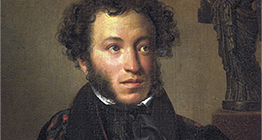
Four brothers and a sister, a nice, friendly family. In the summer - fishing, in the winter - Cossack songs, amicably, harmoniously: "It's full, you, snowballs ..."
And then - the first love: the sister brought her friend Lika back to the house ...
Then the young Chekhov will go on a trip to Sakhalin and return to our already quite familiar Chekhov, in a pince-nez, with a mustache and beard.

With Lika will have to leave, she will go to Paris with another writer. She will write letters, and Chekhov - will write to her in reply: sweet correspondence, where youth, and feelings, and mature reflections - everything is clear, everything is told - from heart to heart.

A louse or not a louse - that's the question.
A man is on the verge of despair. Is capable of anything. And if a person is also smart, this can lead to disastrous consequences.
Poor student. Even a loaf of doctor's sausage is not worth buying. And then there's a bloody callous in front of the account for studying.
And what is so tempting, glitters on the table with fascination? An old family watch. Nominal, engraved. Do chasers become a chance to escape?
The damned usurer turned out to be an avid rubbish. The money offered will not cover any expenses. This is not to be killed at all. One more old woman, one less.
A sharpened ax - here it is a straw for a drowning man. One blow, the second. Rub a puddle of blood, pick up all the jewels. It is done.
To justify the deed, a very convenient theory has already matured. Who said that you can not kill? Everyone is a louse. And the old woman is a louse. Destroy, get out.
One I have the right. Very smoothly comes out. Knowingly received a diploma.
But no crime will go unpunished.
The verdict is announced. You are sentenced to life imprisonment in hell.
Here Hamlet wanders around the stage with a volume in his hand. He, the actor giving a presentation in Elsinore, the prince only on the stage. But, as befits an actor, Hamlet lives his role to the end. So, learning that the present king, Hamlet's uncle, treacherously killed his brother-king, Hamlet's father, in order to deceive the throne, Hamlet decides to take revenge on his uncle. In his decision, however, he is not sure, and he constantly fluctuates between the notorious "to be" and "not to be," and only in the final, dying, dares to pierce his uncle with a deadly rapier.
So, the story line is true to the Shakespearean text, full of questions and insoluble mysteries. However, the fact that Hamlet is actually a lyceum and fulfills his role without parting with the book makes it possible to say that one truly Shakespearian problem is particularly prominently displayed and grotesquely explicated in the production: do we choose the role that we will play? If not, can we even stage it, arrange accents, creatively beat events, scenery, costumes? Or all that remains for us is to act, frantically giving in to the fact that we live, and asking as little as possible about the question, but who has invented all this, if, say, we fell for revenge for our father and die in the finale of our tragedy?
New Year's performances
Circus
Musicals
Comedy
Best
Events
premieres
City tours